Saturday, November 7, 2009

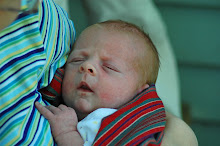
The Baby's Bill of Rights


by Christelle J. K. Hagen

Every baby has the right:

*to be conceived by his own father and mother mutually giving themselves in self-giving love within marriage

*to be welcomed and treasured in his mother's womb

*to be nourished physically, emotionally, and spiritually (through prayer) while in utero

*to be born safely and peacefully, surrounded by his loved ones

*to be nourished and nurtured at his mother's bosom, under the protection of his father

*to be raised by the father and mother who conceived and gave birth to him, in a household of peace, joy, and love

Let us work to give these beautiful gifts to all our babies. Let stronger families reach out to share and bear the burdens of weaker families and to welcome abandoned children. Please join me in prayer for the renewal of culture, virtue, and family life everywhere.

Saturday, October 24, 2009

90 Year Old Retired Midwife Catches Her Great Grandbaby

Earlier this year, a 90 year old (soon to be great) grandma helped her 32 year old granddaughter when she went into labor following a walk. The woman hadn't been active as a midwife in over 50 years, but it seems that midwifery is kind of like riding a bike... :) Here's the link to the story as reported by the MN Parent Blog. Birth works!! I love this story because it shows that birth while amazing can be something very normal and straightforward. I see so many expectant moms who are so very fearful about birth and have been brainwashed into thinking that birth is something that you are lucky to survive intact. I wish that I could let all of you see some of the wonderful "uneventful" births I've experienced!

Monday, October 12, 2009

Adventure Clubs Off & Running


Our new Blazing Trails Adventure Clubs are off & running! We recently finished our first month of history and science/nature studies. September was Ancient Rome (history) and Geology of the St. Croix River Valley (science/nature). We did everything from staring at potholes to gazing on beautiful statues. We watched a volcano explode and listened to poetry about glaciers. We drew pictures. We listened to great books and great naturalists. We learned how to say our names like the Romans would have said them. We created a whole new set of months just for kicks. We ate olives, grapes, and eggs. Julius Caesar and Cleopatra visited our club meetings. We started making a mosaic. Wow. I'm exhausted just thinking about how much we did! One of our moms wrote to say, "What a way to learn--we had a blast."

Monday, August 24, 2009

Blazing Trails Adventure Clubs Fun Logo


Friends,

Check out this cool logo drawn by a future club member!! It depicts two ducks on a pond surrounded by trees with the words "Adventure Club". The artist is 8 years old and his mom reports that he usually likes to draw Bionicles and Star Wars characters, but he thought he would try his hand at drawing a logo for our clubs.

Pretty cool! Thanks for sharing your talent with us!!

Sunday, August 23, 2009

Fertility Matters Method workbook first draft is finished


Over the past month I have put together the class booklet for the Fertility Matters introductory class! I am sending it out to my good friend, Michelle, for editing and feedback. I have also posted a sample on the SCBP website. I would love feedback! Check it out here.

Friday, July 24, 2009

My Reflections on Unassisted Childbirth


As you may know, I'm currently writing a home study course on birth. Yesterday, I wrote a bit about unassisted childbirth. It should be apparent that when it comes to birth, I hold some fairly anti-mainstream positions. I am pro-midwife ("every mother deserves a midwife") and pro-homebirth, for the vast majority who can safely plan a homebirth. However, I am concerned about the rise in popularity of the "unassisted childbirth" (UC) movement. My honest opinion is that the UC movement would not stand a chance if homebirth midwifery was fluorishing. Here's why.

For some of you reading this, the idea of a mother intentionally planning on having no one but her baby's father and perhaps trusted friends on hand during a birth is a perposterous idea. For others, there may be rage that I would question this birthing option. Here's my stance.

90-95% of the time, birth will occur completely normally, without help from anyone. Most women could, if necessary, birth their own baby with their own hands without the help or aid of another person and, most of the time, both would come out just fine. Therefore, the UC'ers have statistics on their side. Most UCs will be normal, straightforward births, with undoubtedly a huge rush and sense of pride: we did it---despite all the naysayers and worryworts!--and all on our own!!!

I'd like to get personal and set out my own grapplings with this issue, then I'll close this post with some general thoughts, as a childbirth educator.

I considered, quite seriously, attempting a UC with my last birth. I was attracted to the idea of the intimacy of the birth. I almost had an unplanned UC with my second birth because it went very quickly and the midwife almost missed it! In retrospect, this was my easiest birth and my only "ecstatic" birth. During my last pregnancy, I compared my second and third births and thought: I liked my second birth better---maybe just plan to do it ourselves this time??

But I thank God for my level-headed husband, who said no. Why am I thankful? While the first stage of the birth went virtually painlessly (honestly), the second stage (pushing) was anything but. My son's head was a full 14-1/2 inches (that's 11.7 cm--so much for 10 cm being "complete"). His was a half inch bigger than my third baby and an entire inch bigger than my second baby!! I am a very petite woman. I have a smallish pelvic outlet. It was a very very tight squeeze, let me tell you. In the midst of this incredibly hard pushing stage, I gave up. I insisted that we go to the hospital. Had it been a UC we would have. I know that my dear husband would not have said, "No, honey, even though you want to give up, even though you've been pushing and pushing, and you're in pain and exhausted, we'll stay here a little longer." Let's be real, there are very few husbands who want to see their wives in pain, and even fewer who would prolong that pain, knowing there was an alternative. And I suspect there are even fewer men who want to take the rap for making the wrong call and NOT going to the hospital when that really was the right decision. My midwife SAVED my birth. She was the one with the experience and skill who knew I was just wimping out and said: no. I have no doubt that if there was the slightest hint that the situation needed medical intervention, she would have been the one to make that call. But she knew everything was going normally, that baby & I were tolerating labor just fine, and that I needed someone to get me to focus on birthing that baby and not looking for an easy way out. That's what a good midwife does.

UC is a myopic movement. Midwifery appears across cultures. Midwives have been with the human race for almost as long as the human race. There's a reason. Several reasons actually. Safety. Experience. Wisdom. Skill. While over-management of birth has turned the normal life event of birth into a potential crisis, let's not throw the baby (or in this case, the midwife) out with the bathwater.

Sunday, July 5, 2009

Nearing Menopause? Sail with Confidence


For those of you who may have read the article in the July-August 2009 Family Foundations, you might appreciate reading my original article, in its entirety (as submitted). Enjoy!

When a girl has her first period, she has “become a woman”. So what does she become when her periods are over? Superwoman!

Like getting her first period, menopause is a normal transition in a woman’s life. And like puberty, the years before menopause—premenopause—can be smooth sailing or rough seas. Whatever her individual experience may be like, whether relatively straight-forward or downright confusing, her acquired patience with discomforts and trials will serve a woman well as she navigates the unfamiliar waters that lead to menopause. For couples, this time of transition—and the unpredictable cycles that usually accompany it—may be a significant challenge to the couple’s commitment to practicing marital chastity. The Couple to Couple League now offers couples practical aid through this passage: a special premenopause class and a new book, The Art of Natural Family Planning ® Premenopause Student Guide.

Menopause officially begins when a woman has not had a period in one full year, providing there is no other reason for the lack of menses. During premenopause, many women experience the infamous hot flashes, vaginal dryness, forgetfulness, or weight gain. Early on in her Change, a woman tends to focus on developing coping strategies for these new physical experiences. Later on, the emotional and sometimes spiritual changes assume more importance.

Just as it typically takes several years for a young woman to transition to regular cycles after her first period, winding down to menopause also takes a number of years—for most women, it takes two to five years to go from regular cycling to menopause. This transition may start as early as age 35, but typically begins in the early to mid-forties. Half of all women will have experienced menopause between ages 50 and 52.

The easiest time to use Natural Family Planning methods is during the years of regular, predictable cycles, usually when the woman is in her twenties and thirties. Developing fertility awareness and seeking to avoid pregnancy is usually quite a challenge as couples go through premenopause; couples should be prepared to be patient and flexible. Cycle lengths may fluctuate wildly from one to the next. Ovulation may occur much earlier or much later than expected. Luteal phases may be a matter of a few days, or ovulation may not happen at all, requiring lengthy times of abstinence. Bleeding at the middle of the cycle may occur for the first time in a woman’s life, which may be worrisome or confusing. Since temperature patterns and mucus patches may be confusing, couples may find the cervix sign to be more helpful during this time than in earlier years.

Yet the Change is more than just a biological event; it is a significant life passage—a woman must let go of her identity as a potential bearer of new life. For women who have never married, married late, chose not to have children, or experienced infertility, menopause may present a greater challenge than for those menopausal women who still have children growing up at home, as it signals that her biological clock has finally rung—for good. Menopause is a loss—the loss of the potential to bring another child into the world.

Yet more importantly, menopause is also a gain. Some couples may continue to be drawn to parenting—and adopting a child or children may be right for their family. Other women may enjoy the freedom to work, volunteer, pursue higher education, participate in political action, or explore causes, interests or hobbies that were laid aside during the earlier years of intense child-rearing. Beyond her newly increased freedom, menopause usually affords a woman time to work through old baggage and find new perspectives on herself, her past, and the world—a kind of psychological “spring cleaning.” “Superwoman” status means loved ones and even strangers may seek her advice, and instead of the timid, reticent woman she may have been, many menopausal women will acknowledge that they are now an authority on many issues. (See the 'UP'side of Menopause.)

Finally, even the most casual glance at the demographics of many church services should be enough to convince that the years after menopause can be deeply enriching for one’s spiritual life. For menopausal women with children, child-rearing duties gradually decrease, affording more time for prayer. Many holy couples experienced the deepening of their spiritual lives after the wife’s menopause—for example, married saints who devoted the remainder of their married life to prayer and works of mercy. Consider St. Monica’s menopausal life: at 54 years of age, her love for her errant son Augustine led Monica to embark on a sea voyage from Africa to Rome. Not finding her son in Rome, she traced him to Milan and a year later was blessed to experience his conversion and baptism. She died just a few months later, her work completed, having cooperated with God in her son’s second birth and giving the Church a saint and doctor of the Church. (Ferdinand Holbock, Married Saints and Blesseds through the Centuries, trans. Michael J. Miller, San Francisco: Ignatius Press, pp. 70-75). While the time for bearing 'the fruit of her womb' may have passed, the years following menopause can be a time for great spiritual fruit, and perhaps, like St. Monica, a time to embark on a woman’s greatest life’s work.

Monday, June 1, 2009

What's So Great about Giving Birth at Home?


There are probably as many different answers to this question as there are women who choose homebirth. But today, I will focus on just one: safety. SAFETY?! Yes, safety. No birth is risk free, no matter where a mother gives birth. Some women feel safer in the hospital (after all, they have all that equipment and personnel RIGHT THERE "just in case"). And no doubt about it, things can go wrong during a birth. Do not let anyone give you a false sense that birth is risk-free.

Yet on the other hand, do not let anyone give you a false sense that birth in a hospital is risk-free either. The problem with a death or injury in the hospital is that it is generally assumed that "it would have happened anyway and I'm so glad they were there to save me." This is a false belief. Many practices that go on during hospital births CAUSE injuries that, tragically, can lead in a small number of cases, to unnecessary deaths, but much more often, to a scary, unsatisfying birth experience that feels more like a TV drama than a normal, natural process. How? The hormones that are responsible for normal childbirth depend on certain conditions: a mother must feel SAFE and LOVED. (Those of you who have taken my birth classes must remember this mantra of mine.) Safety has everything to do with privacy.

Do I feel safe when I am semi-clothed, surrounded by strangers, going through a normal bodily process that I cannot control that might cause me to shout or moan, as blood and other fluids come out of me? I think not. I cannot feel safe giving birth in a strange place, around strangers, no matter how well-intentioned, well-trained, or well-educated they might be. When I do not feel safe, my natural pain killing hormones--endorphins--do not work like they should, so pain increases. As pain increases, I become anxious. When I am anxious, oxytocin slows. Since oxytocin drives contractions, less oxytocin means contractions slow. I become frustrated by the lack of progress. Adrenaline kicks in. Contractions slow even further. I am even more frustrated. Why doesn't my body WORK? I worry that this is taking too long and will I be able to give birth at all? I then get an IV stuck in my arm with artificial oxytocin (Pitocin) that causes me pain. I have tubes coming out of me and monitors strapped to my body and possibly to my baby's head that keep me from being able to get up and move around, something that might help relieve pain and get labor going. More adrenaline. Labor slows or even stops. This is what happens to many many mothers laboring in hospitals.

At home, the only people there are those I have chosen to be with me. I know far beforehand that my midwife has herbs or medication to help me if I begin to bleed after the birth and equipment to help the baby start breathing if necessary. Even if labor goes slowly, I do not feel unsafe. I have my husband with me who cares for me, and my midwife whom I trust. There are no strangers around who might make me feel strange for the volumes of sound I am producing or the fluids coming out of me. There are no strangers coming in and out, asking me questions, looking at machines and checking things as if I am a time-bomb that could explode at any moment.

Endorphins can increase to meet the level of pain I am experiencing. When I feel loved, when my husband holds me and tells me how good I'm doing, oxytocin levels go up. I can move around as I please, and therefore, labor can progress normally, most of the time. And if my midwife thinks it is truly taking too long, we can transport to the hospital if necessary, and I won't have to wonder if I could have done it at home, because I will have tried.

No, homebirth isn't for everyone. Some mothers or babies have legitimate health concerns that make hospital birth safer for them. But many more mothers could give birth successfully at home, surrounded by their loved ones, if they would only try. There would be fewer injuries overall. A helpful comparison is to look at a large set of homebirth statistics--which is available from the Farm homebirth midwives who, in this study, helped 1707 mothers. There was a perinatal (infant) death rate of 1% for these homebirths--this was slightly less than the hospital group, though the difference was not statistically significant. There were no maternal deaths among the Farm mothers.

Unless they need to transfer, homebirth clients birth without any pain medication, which is safer for mom and baby. In the Farm study, over 90% of mothers birthed at home, without any pain medication--this compares to about 90% of hospital birthing mothers who birth with an epidural or intrathecal, according to one local nurse-midwife who asked me not to give her name. (Statistics from mothers graduating from SCBP classes are somewhat better: 50% of moms who birthed in hospital used pain medications--no homebirth moms used pain meds.)

What was statistically significant in the Farm study were the differences in interventions used in the hospital births vs. homebirths. Homebirthing moms hardly ever require forceps or vacuum extraction, in my opinion, because they are allowed to push in the positions of their choice, not those positions "encouraged" by those around them, which are usually less advantageous for birthing. In the Farm study, 2.11% of moms required a cesarean, forceps or vacuum extractor. 26.6% of those mothers giving birth in the hospital needed those interventions. For cesarean alone, only 1.46% of mothers assisted by the Farm midwives required a cesarean vs. 16.46% of the hospital mothers. As a whole group, it is estimated that homebirth midwives (not just the Farm midwives) typically have cesarean rates of less than or around 5%. In the U.S. at large more than 30% of women have their babies delivered surgically.

What about transports to the hospital from homebirths? The most common reasons for a transport to the hospital are not life-threatening complications, but because labor seems to be taking too long or meconium in the waters. Just like in the hospital, baby's hearts are monitored during labors at home---but usually with your midwife's ears, and a handheld Doppler or fetoscope, rather than machines and wires. So if your midwife detects that baby just isn't tolerating labor well, you will transport. In my experience, another common reason for transports among homebirthing mothers I know, is for tears that need stitching (an important skill that I interview for and require in a homebirth midwife before hiring her). To get some perspective, transfers of care were required in 13.5% of Farm mothers, only 7.4% of these during labor. This seems comparable with other homebirth studies. (See this webpage for more.) In other words, most mothers who want a homebirth are able to achieve that homebirth--especially if they have had a baby before. But even most first time moms can successfully birth at home, if they are determined, and have excellent support.

Thursday, May 21, 2009

What is a Fertility Midwife?


I would like to create a new title for a new vocation: 'fertility midwife'. The fertility midwife would meet with couples once a month (or be in contact over the phone for couples farther away) for about six months prior to conception to work on helping the couple to improve health practices in order to achieve a state of optimum wellness---healthy "soil" and healthy "seed". I believe this is so important and so overlooked. It seems that most sub-fertile couples with whom I am in contact look at getting pregnant as the only goal. And of course, getting pregnant is a wonderful and marvelous goal! Yet as a childbirth educator, I know that having problems conceiving usually tends toward problems with the pregnancy and problems during birth and problems with breastfeeding. The wonderful way in which God designed our bodies is to protect us from these problems. If there is a chance for greater difficulties down the line, our "fearfully and wonderfully made" bodies put the brakes on at conception. Having trouble conceiving is a sign that we are out of balance. I'm not saying that infertility is the wife's fault or the husband's fault--sometimes difficulties with fertility arise because of events that occurred when we ourselves were in the womb, or in our early infancy or childhood. Yet there are many many things we can do to "tip the scales" toward fertility. These are the techniques that a fertility midwife would be trained to teach others.

When a couple comes to me for fertility counseling, we first begin with trying to understand the couple's history--the many many experiences that helped shape the people they have become. Then we work on understanding who they are today: their eating habits, exercise routines, work loads and stress levels, exposure to pollutants, and for the wife, her menstrual and ovulatory patterns, as beautifully demonstrated on her own charts---those wonderful charts on which she records the observations she herself makes of her own body. As well as, of course, understanding when exactly the couple is attempting to achieve pregnancy! All of this information is vital to making a personalized Healthy Conception Plan. This is the work a fertility midwife must do if she is to truly aid couples.

I have a dream: a dream that not only would those couples who are having trouble conceiving visit with a fertility midwife, but even "healthy" couples. To pad the fertility midwife's pockets? Nope! Because healthy children come from healthy parents. We all benefit from having someone else to keep us accountable. When am I the best hydrated? Ask my husband--it is when I know I will have my midwife checking my heart rate at my prenatal appointment!! We all have less than ideal, even downright unhealthy habits. The fertility midwife is there to be the couple's accountability--to keep the couple accountable to those healthy habits that will be the best foundation for a healthy baby. I repeat: healthy children come from healthy parents. Bring on the fertility midwives!

Wednesday, May 20, 2009

St. Croix Valley Mothers Need Midwives


I have just spent a fascinating few precious my-son-is-sleeping moments reviewing and comparing statistics on St. Croix Valley births. WOW! Mothers NEED midwives! I have always theoretically known this was true, but it is so fun to actually see this play out in real births. All these statistics are from births of real couples who have taken St. Croix Birth & Parenting classes. All of the women who have taken my classes have been low risk, whether they chose midwives or physicians to attend their births.

Natural Childbirths: no pain medications used during labor
85.7% of midwife-attended births were natural childbirths
20% of physician-attended births were natural childbirths

Inductions: starting labor before it starts on its own
0% of midwives induced labor
20% of physicians induced labor

Augmentations: using artificial hormones to speed labor
14.3% of midwife-attended births were augmented
40% of physician-attended births were augmented

IV's: intravenous fluids given to the mother
28.6% of midwives used IV's
60% of physicians used IV's

The only outcome for which physicians had a better track record was maternal tearing.
42.9% of mothers who had a midwife had a tear
20% of mothers with a physician had a tear

However, this outcome needs to be looked at more closely, because an additional 20% of mothers with a physician in attendance had an episiotomy performed. None of the midwives performed an episiotomy. This brings the results for any perineal trauma:
42.9% of mothers with a midwife experienced perineal trauma
40% of mothers with a physician experienced perineal trauma

Additionally, of the midwife-attended births, one-third were first degree tears (a mere split in the skin) requiring no stitches. Two-thirds were second degree tears requiring stitching. Of the physician-attended births, half of the group had an episiotomy (basically a second degree, or worse, iatrogenic--physician-caused--tear)and the other half had severe tears (3rd or 4th degree tears). In other words, even though the midwives had a slightly higher rate of perineal trauma, the actual tears were milder.

A very important observation is that in all cases of second or greater degree tears, an IV had also been used. IV's are NOT a "harmless" intervention. For those of us who believe that mothers can and should birth over an intact perineum, IV usage needs to be seriously re-evaluated.

On the plus side for all St. Croix Birth & Parenting births, we still have no cesareans, no forceps or vacuum extractor births!!! Way to go, couples!

It should be noted that actual numbers of couples are still small, but large enough now to begin to show a difference between the way midwives and physicians practice in the St. Croix Valley. I am eager to keep getting new student couples in order to continue to encourage mothers to achieve enriching, satisfying, safe births! Kudos to midwives in the St. Croix Valley, who are doing a great job meeting these goals!